News
Dr Victor Hugo Gonzalez Sanchez: Planning for many futures: reflections from the PyPSA workshop in Birmingham
28.09.2026


Dr Victor Hugo Gonzalez Sanchez, Research Associate, University of Bath (Supergen Energy Networks Hub)
Every decision we make about the energy system today, whether it is a new power line, a battery or a hydrogen store, will still be with us in 2050. Yet nobody knows what 2050 will look like. How do planners decide what to build? Increasingly, they use computer models that let them test thousands of “what ifs” before anything is built.
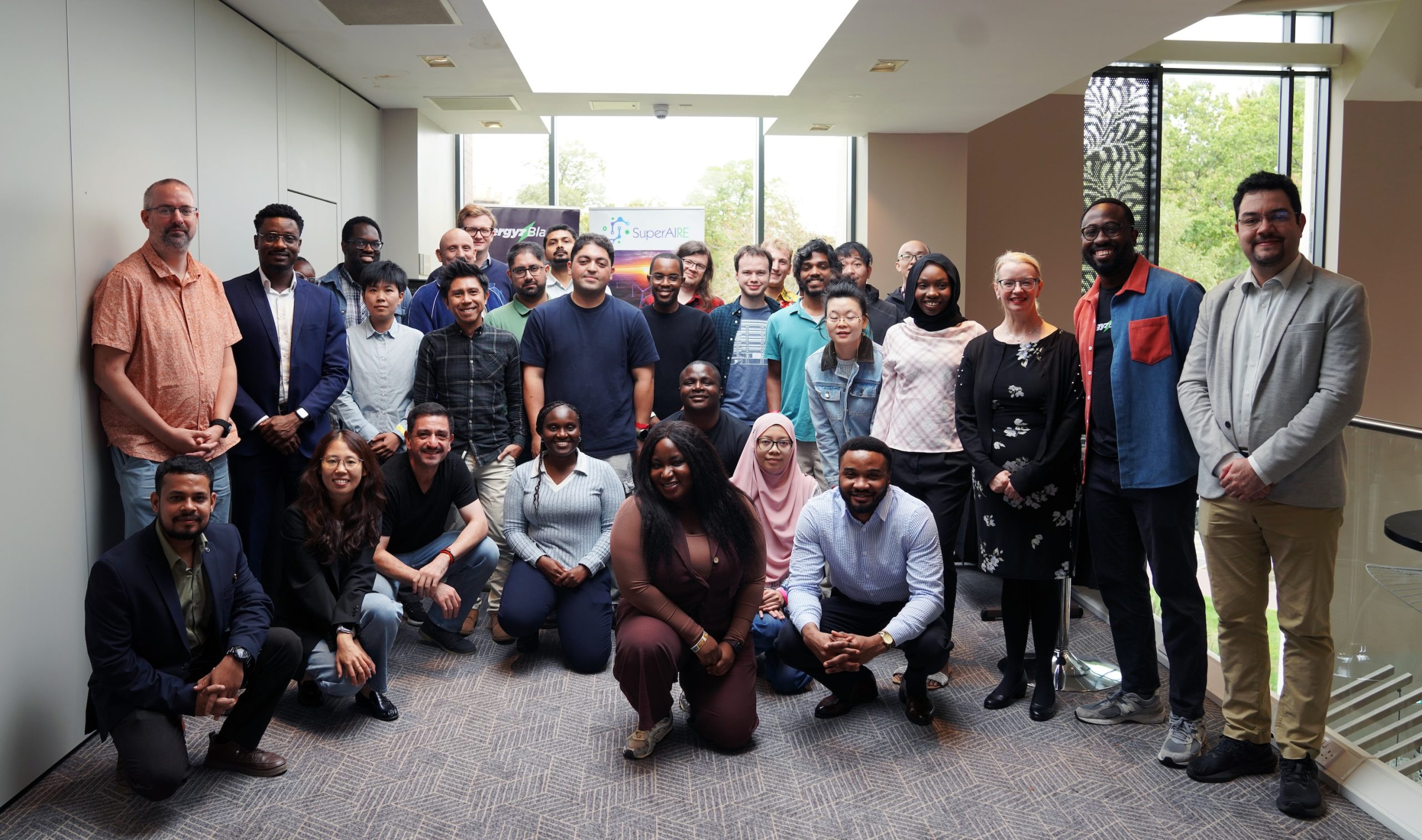
On 10 and 11 September 2026, I joined around 30 researchers, PhD students and industry colleagues at the University of Birmingham for a two-day, hands-on workshop on one of these tools: PyPSA. The workshop was organised by Dr Grant Wilson, hosted by the Supergen Energy Networks Hub and delivered by PyPSA Labs, with Dr Fabian Neumann and Dr Iegor Riepin as trainers.
What is PyPSA?
PyPSA (Python for Power System Analysis) is a free, open-source toolbox. It lets you build a digital “sandbox” of an energy system: power stations, wind and solar farms, power lines, storage and demand. It then finds the cheapest way to run that system, or to expand it, while respecting the rules we set. For example, it must meet demand every hour and stay within an emissions limit. A sister project, PyPSA-Eur, builds a model of the whole European energy system automatically from open data on grids, power plants, weather and costs.
Why it matters
Three things stood out for me.
Openness. The code and data are public, so anyone can check the assumptions behind a result, run it again and build on it. Energy studies inform decisions worth billions, so this transparency builds trust. It also explains why the same tool is used by universities, grid operators and governments.
Connecting sectors. Electricity no longer works on its own: heating, transport, industry and hydrogen are increasingly linked. In one exercise, removing fossil gas from a simple model of Germany turned hydrogen storage into a seasonal battery. It filled up with spare solar power in summer and released energy through the winter. The model worked this out by itself; nobody told it to. That was striking to see.
Planning under uncertainty. This was my favourite session. We imagined three futures: business as usual, a gas price crisis, and a volcanic eruption that dims the sun. A plan designed for any one future performed badly if a different one arrived. Planning for all three at once gave a more robust plan, with an expected cost about 7% lower than the best single-future plan. Even better, a small “insurance premium” bought a large reduction in the worst-case cost. The trainers also showed that changing only the weather year used in the European model can shift total system costs by around 10%. Planning around a single “typical” year can hide real risk.
Beyond the code
Some of the most valuable moments came from the discussions. One trainer described a recent power cut in Berlin. Several supposedly independent cables all crossed the same bridge, and a single fire took them all out. Much of the public debate afterwards was about whether grid data should be published. The more useful question, the trainer argued, was why the network had been designed with such a single point of failure.
That story connected directly with my own research at Bath, which looks at how extreme weather, such as heatwaves, puts stress on transmission networks. Resilience is often about the hidden links between things that look independent. I left Birmingham with a practical toolkit and new ideas for studying climate resilience in the GB network.
Thank you
My thanks go to Dr Grant Wilson for organising the workshop and welcoming us to the University of Birmingham, and to the Supergen Energy Networks Hub for making it possible. Thanks also to Dr Fabian Neumann and Dr Iegor Riepin for two generous days of teaching and for patiently answering our many questions, and to my fellow participants for such lively discussions.