

Gaurav SEN, PhD Student, Electrical and Electronic Engineering University of Bristol
Energy systems can shape the way we lead our lives: it can create new jobs, allow us to explore new hobbies, give us convenience, but can leave a gaping hole too if we are unable to use it to our benefit and if we are unhappy. On the other hand, we can shape energy systems to give us all the benefits and make us happy too. This is where lies the unique convergence of the Supergen Energy Networks Hub and the SHINE project. The SEN hub aims to improve the energy infrastructure and resilience at different levels, i.e., locally, regionally, nationally, and globally. SHINE investigates improving people’s well being through energy access, something truly possible through people centric energy system designs and implementation. Their convergence gives us the apt energy systems that the world needs: ready for the future, resilient, and supports communities as stakeholders.
In lieu of this, with the support of the SEN hub and the SHINE project, I went on a field trip to Brazil to explore how SHINE partner Grupo de Estudas e Disenvolvimento de Alternativas Energeticas (GEDAE) of the Universidade Federal do Para (UFPA) is implementing this for communities in the Amazon river basin, and work on my PhD research about how we can further improve this through designed-for-localisation technology.
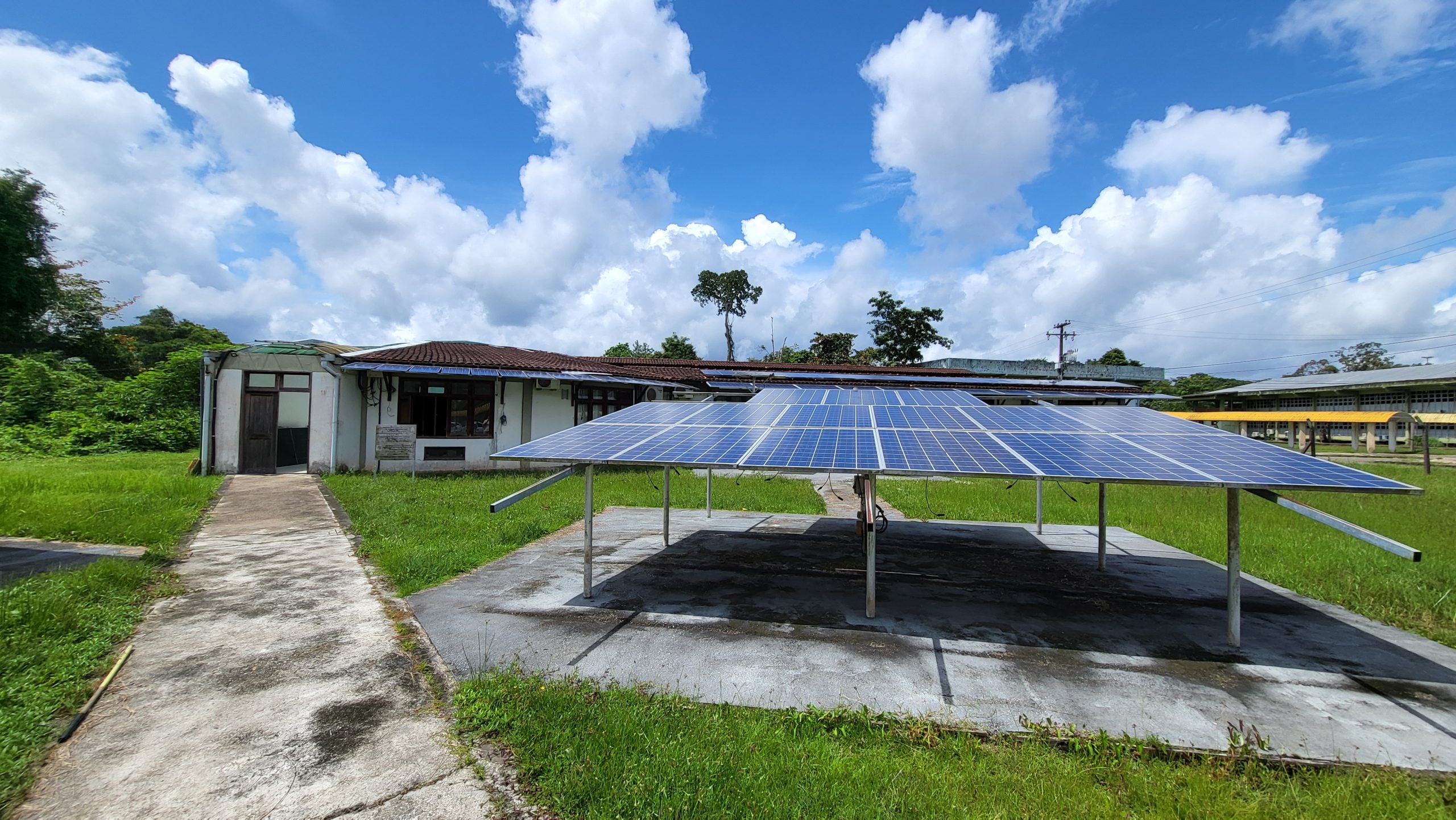
GEDAE currently works with two island communities: Ilha das Oncas and Ilha da Pacoca. Working with the communities, the GEDAE team help set up community owned DC microgrids, enabling energy independence. And this has helped the community in many ways, mainly because it was done with their interest in mind. To take this further, I am interested in seeing how technology can be designed with people and places in mind, to make sure that the electrical equipment used for such microgrids can be used not just for their benefit, but also for the wider region, and how it can enhance sustainability and independence by allowing communities to take charge of maintenance and repair, instead of solely relying onexternal help and support.

During my stay in Brazil, I was able to test designed for localisation converters in the GEDAE lab facilities. These tests allowed me to understand how equipment designed with local specifications can be tested and deployed, and how these methods can help guide the design of future equipment as well. In between carrying out these tests, I went on 3 trips in total, 2to Ilha das Oncas, and one to Ilha da Pacoca, where we stayed overnight. These trips are organised at regular intervals by the GEDAE team to for continuous community feedback to help improve their own systems, and to monitor and evaluate system performance for future research and community benefit. I spoke to the people in these communities to understand how design for localisation can improve their lives; this is a key step in having consumers as the stakeholders in the design process for better impact. It will help shape my research and help the wider energy community understand the benefits of design for localisation and how it can positively impact energy communities worldwide, especially those living in remote areas. The GEDAE team involvement in these communities is a great example of how community engagement can be
beneficial in the long-term.
On the trips to the island, I was delighted to see the fantastic work being carried out by the GEDAE team under the leadership of Prof. Wilson Macedo and Prof. Marcos Galhardo, and how the communities have been spearheaded to better energy access and improvement in their livelihoods. Seeing the work that has been carried out for almost a decade was inspirational, and the joy on the faces of the people living there shows what impact is! It was eye-opening to see what impact can be when engaging with the right stakeholders. Having returned from this trip, I look forward to progressing with my research and develop my work further for further testing and deployment.

🎥 Dr Gaurav Sen’s reflections on his experience in Brazil
I would like to take this opportunity to thank the SEN Hub, the SEN ECR Committee, and the SHINE Project for their continued support to make this trip viable, and a big thank you to the GEDAE team at UFPA hosting me and providing me with the opportunity to learn more about their work and carry out my research.