


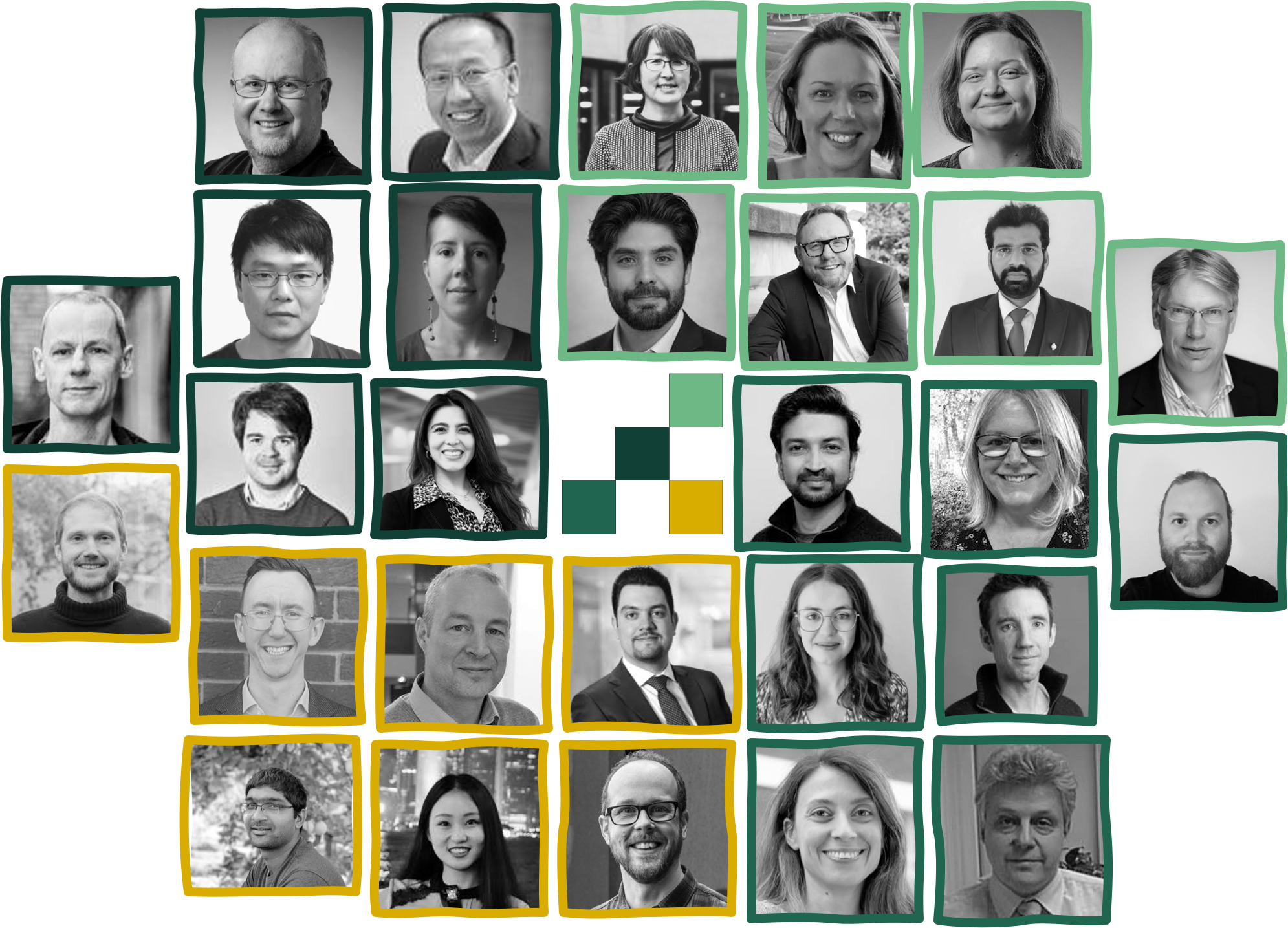
The Supergen Energy Networks Hub community came together in Cardiff for three days of collaboration, knowledge exchange, and strategic discussion, bringing together partners from across academia, industry, and the wider energy sector. The programme showcased the breadth of activity taking place across the Hub, from advancing the technical capabilities needed for future power systems to exploring how research can deliver greater impact and how data can support the transition to net zero.
Through workshops, panel discussions, keynote presentations, and networking opportunities, participants shared expertise, strengthened partnerships, and identified new opportunities for collaboration.
The week highlighted the importance of working across disciplines and sectors to address the complex challenges facing the UK’s energy system and accelerate progress towards a resilient, sustainable energy future.
Day 1: Modelling, Simulation and Analysis Capabilities Required for Inverter-Dominated Power Networks (in collaboration with the MOSAIC project)
We kicked off the week with an interactive workshop co-hosted by Cardiff University, bringing together the Supergen Energy Networks Hub (SEN) and the Modelling, Simulation and Analysis Innovation Centre (MOSAIC) team. The session focused on identifying the critical modeling, simulation, and analysis capabilities needed to support an inverter-dominated Net Zero power system.
The event convened industry and SEN academic partners, including SP Energy Networks (SPEN), National Grid Electricity Transmission (NGET), NESO, and the Energy Systems Catapult, to examine emerging challenges and strategic opportunities for the evolving electricity system.
Highlights of the day included keynote presentations from Prof. Agustí Egea-Àlvarez (SP Energy Networks and University of Strathclyde), who introduced the scope of MOSAIC, and Dr. Marc Cheah (Universitat Politècnica de Catalunya), who shared insights into small-signal analysis methods for modern power systems.
Collaborative group discussions followed, focusing on defining technical gaps and shaping strategic recommendations for the future UK grid modelling, simulation and analysis capabilities roadmap. We look forward to deepening the collaboration between MOSAIC and SEN as the projects progress.


Day 2: SEN Team Research Day
The SEN Research Day opened with a panel session on “Bridging the Industry-Academia Gap: Research to Impact” organised by Stephen Haben and Muditha Abeysekera from the Energy Systems Catapult, exploring how research can better respond to industry needs and deliver societal and economic impact.
A particular highlight was the panel discussion, with thanks to Dr. Avinash Aithal Energy Networks Association (ENA), Dr Ewa Nowicka- Ratajczak Ph.D Innovate UK and Dr Daniel Donaldson, University of Birmingham and SEN Co-Investigator for sharing their valuable perspectives. The day also provided a great opportunity to catch up with SEN colleagues, reflect on ongoing research, hear from colleagues across the Hub and discuss future priorities for SEN
Day 3: South Wales Energy Data Event and Workshop (in collaboration with SWITCH to Net Zero Buildings)
Day three centered on the vital role of energy data in driving the transition to net zero.
The session showcased a SWITCH to Net Zero Buildings funded project, led by Cardiff University in collaboration with Supergen Energy Networks Hub, which focuses on developing an integrated energy data platform for South Wales. The workshop provided a valuable forum to exchange knowledge, align complementary initiatives, and explore key use cases for future shared data platforms.
Bringing together experts from academia, industry, utilities, government, and local authorities, the event featured insights into regional and national data initiatives. Justin Davies of Net Zero Industry Wales delivered a compelling keynote alongside contributions from NESO and CGI, outlining the opportunities and challenges of data-driven energy systems. Attendees also engaged with rapid-fire lightning talks showcasing cutting-edge data activities from Cardiff University, the Universities of Bath and Birmingham, Energy Systems Catapult, and Cultivate Innovation.
Collaboration was at the heart of the day’s discussions.
Through interactive breakout sessions and networking, participants identified the data, evidence, and modeling capabilities needed to advance the Celtic Freeport and the South Wales Industrial Cluster, underscoring the power of cross-sector expertise in solving shared energy challenges.
The event was a great conclusion to a successful three days and provided an excellent platform for knowledge exchange and reinforced the importance of collaboration in delivering the energy transition.


A huge thank you to the SEN Cardiff team for hosting and organising a fantastic three days of networking, collaboration and knowledge exchange, Muditha Abeysekera, Shuai Yao, Daniel Carr and Sian Allister. It was great to connect with colleagues, strengthen partnerships and look ahead to the next phase of activity across the Supergen Energy Networks community.
The Hackathon is a collaborative initiative delivered by Energyz Black, in partnership with Supergen Energy Networks, UKERC, , the Energy Demand Research Centre (EDRC) and SuperAIRE. It will bring together postgraduate and early-career researchers from across disciplines to work in multidisciplinary teams on real-world energy challenges using open datasets.
The Hackathon will focus on three challenge tracks:
Track 1: Energy Poverty & Equity
Track 2: Future Electricity Systems
Track 3: Heat, Buildings & Decarbonisation
Participants will gain valuable experience in collaborative problem-solving, expand their professional networks, and engage with experts from academia, industry, and policy. The event aims to foster interdisciplinary thinking, strengthen cross-sector connections, and support the development of the next generation of energy researchers.
Capacity for this event is 40 attendees, register now to secure your place.
Registration closes: 29 August 2026

16 September 2026 | 09:30-17:00 | IET London
EDI+, UKERC, Supergen Energy Networks Hub and IGNITE Networks+ have joined together to deliver an event to showcase of EDI+ Fellowship work and a conversation about inclusion in energy research.
This will be a great opportunity to explore the impact of EDI+ Fellowship projects, engage in discussions on inclusive research cultures, and network with researchers, practitioners and sector leaders from across the energy and STEM communities.
The day will include:
- Insights from EDI+ Fellows
- Interactive discussion stations and poster exhibitions
- Expert speakers and panel discussions from across the sector
- Networking opportunities
We are really excited to be collaborating and support to drive a conversation about inclusion in energy research.
With confirmed speakers including Patricia Thornley, Department of Transport, Rachel Van Krimpen, University of Nottingham, Simone Abram, Durham Energy Institute, Jim Flemming, EPSRC, Mustafa Ozbiglin, Brunel University and Helen Stockton, National Energy Action.

The Energy Research Hackathon is a collaborative initiative delivered by Energyz Black, in partnership with the UK Energy Research Centre (UKERC), Supergen Energy Networks, Energy Demand Research Centre (EDRC), and SuperAIRE. The event brings together early-career researchers, academic institutions, industry representatives, and policy stakeholders from across the UK energy sector to tackle real-world energy challenges.
Taking place in Birmingham on 11 September 2026, the Hackathon will provide early-career researchers with the opportunity to work in multidisciplinary teams, collaborate with leading experts, and develop innovative solutions to challenges shaping the UK’s energy transition.
Participants will gain valuable experience in collaborative problem-solving, expand their professional networks, and engage with experts from academia, industry, and policy. The event aims to foster interdisciplinary thinking, strengthen cross-sector connections, and support the development of the next generation of energy researchers.
More details to follow
a {
text-decoration: none;
color: #464feb;
}
tr th, tr td {
border: 1px solid #e6e6e6;
}
tr th {
background-color: #f5f5f5;
}
September 2026, we will partnering with DAFNI and hosting a Clean Energy workshop at the DAFNI: Data & Analytics Facility for National Infrastructure Conference.
This event brings together researchers and practitioners to address some of the UK’s most pressing infrastructure challenges through the use of shared data, models, and advanced analytics. The workshop aligns closely with our mission-driven approach, with a strong emphasis on collaboration, innovation, and real-world impact. with contributions from Cadent and Kraken to bring together perspectives from across industry. academia and government.
The focus will be on exploring how integrated modelling and analytics can support more effective decision-making across energy networks. The workshop will also provide a space to share perspectives across disciplines and sectors, creating meaningful dialogue and encouraging new ways of thinking. By bringing together diverse expertise, we hope to build connections that help translate research into practical solutions.
We are looking forward to contributing to a forum that champions connected thinking, open collaboration, and community building, and to work with attendees to help shape the future of research and practice in this space.
Insights from the workshop will contribute to an impact report for Government and UKRI, helping to inform future thinking and activity in clean energy and infrastructure resilience

2 June Bristol (In person)

We are hosting a workshop in June to bring together colleagues to create a shared space to exchange perspectives, explore current research challenges, and collaboratively develop ideas focused on the next steps in AI and digital innovation for the UK energy network.
The workshop will be facilitated by Dr Gareth Buchanan and will build on the workshop held in January at the University of Bath, the emphasis will be on co‑developing research ideas with clear pathways to funding.
We are looking forward to using this workshop as an opportunity to generate new ideas and advance thinking around the role of AI in energy systems
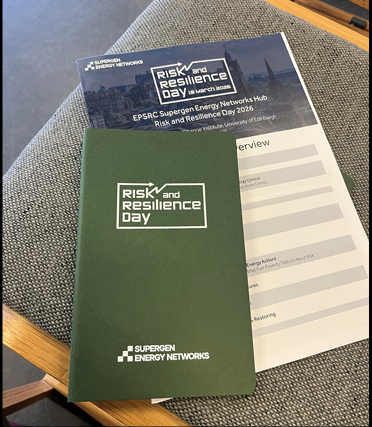
The 2026 Risk & Resilience Day, organised by Supergen Coinvestigator Dr Robin Preece was held at the Edinburgh Climate Change Institute on 19 March. The day brought together researchers and industry experts to explore cutting‑edge work in energy system risk, uncertainty, and resilience.
Largest to date with tickets selling out the week before the event. 85+ attendees from 14 UK & 3 International Universities, and 13 other organisations including Ofgem, Met Office, Climate Change Committee, National Grid, SPEN, SPENW, NESO, and the European Marine Energy Centre, and 30+ posters showing the breadth of engagement across networks including electricity, gas, and heat.
For further information visit the Risk & Resilience Day website

World-leading energy networks experts will call for renewable power generation facilities to be connected to the UK grid more quickly at a conference in Bath this week.
The Supergen Energy Networks Hub Annual Conference will highlight the role power networks play in delivering key national targets in reaching net zero, delivering green growth, powering new data centres that will help the UK become an AI superpower, and tackling issues including energy security and fuel poverty.

Sheridan Few from University of Leeds discusses decision making in Energy Networks
The next of many future interviews with Supergen members that looks at the diverse challenges and solutions that face Energy Networks. Dr Robin Preece talks us through transitioning to Net Zero and all the challenges that we face.
We sit down with Dr Robin Preece, Reader in Future Power Systems within the Department of Electrical and Electronic Engineering at the University of Manchester and Deputy Director of Supergen Energy Networks Hub. Dr Preece talks to us about the who, what, how and whys of transitioning our power systems and all the factors that could effect the decisions made.


To find out more about Dr Robin Preece and his work, click below: