Research

The Supergen Energy Networks Hub (SEN) impact focused research programme has been designed around the concept of research missions. Our grand challenge, for energy networks to become a driving force towards a rapid, safe and just transition to net zero.

Our multi-disciplinary mission focussed challenge requires collaborative teams from Industry, Academia, Government and Civil Society to work together to Accelerate, Scale and Deliver real impact.

square

Supergen Energy Networks Hub

The Hub, led by Director, Professor Phil Taylor (University of Bath) and Deputy Director, Dr Robin Preece (University of Manchester), provide leadership, research, and networking for the energy networks community.


Hub’s Mission


To carry out highly impactful interdisciplinary research such that energy networks are not just enablers of the low carbon transition but become a driving force towards a rapid, safe and just transition to net zero.

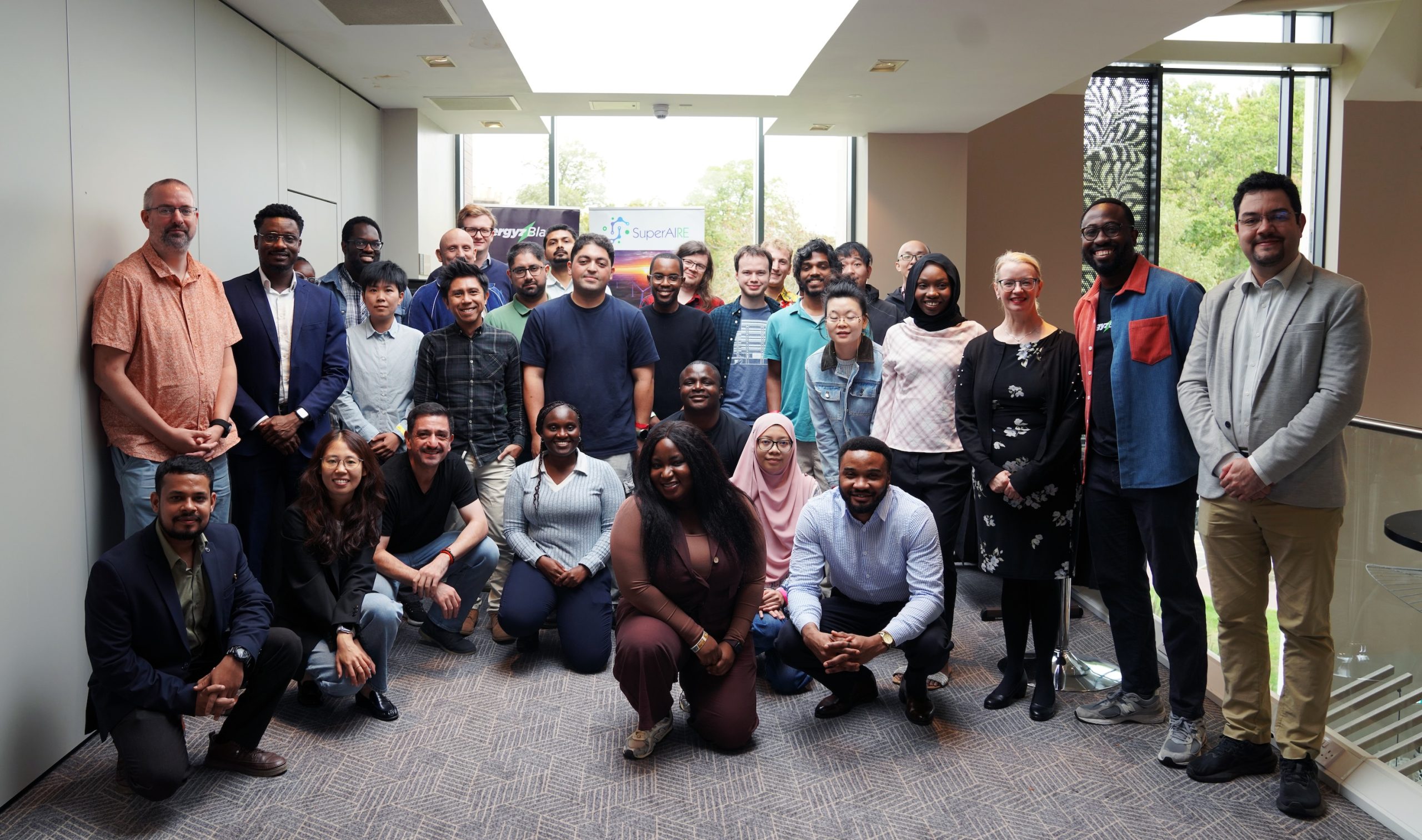
The Hub has established a vibrant, well-connected, diverse, open and communicative energy networks community with a deeper understanding of whole systems approaches to energy networks.


Stakeholders


The Hub integrates a wide range of stakeholders while complementing national and international investments in energy networks, allowing all stakeholders to fully exploit opportunities in the sector.

Work Packages & Missions

The research component of the Hub’s activities comprises an interconnected and complementary series of work packages (WP).


The three missions focus on low carbon solutions for:

Net Zero Whole Systems

Large Scale Energy Networks

Regional and Local Energy Networks


Each mission will be underpinned by our four Work Packages (WP):

Digitalisation

Policy, Society and Place

Markets and Regulations

Risk and Resilience

box

WP2

Policy, Society and Place

Lead: Peter Taylor and Sheridan Few

This work package will maximise impact by engaging with a diverse range of stakeholders, using various participatory processes to model and analyse the evolution of future networks and support decision making. The focus will be on what action needs to be taken now in the face of uncertainty about a range of technical, economic and social factors, including how best to support the most vulnerable members of society.

box

WP3

Markets and Regulations

Lead: Furong Li and Chenghong Gu

This WP will design a holistic commercial framework for promoting cross-vector network services and recovering network costs. A whole-system framework will be developed to extend traditional services based on costs and quantities and encompass provider responsiveness.

box

WP4

Risk and Resilience

Lead: Robin Preece

This WP will quantify risk and resilience in future energy
networks using innovative metrics, will exploit these to quantify the risks associated with different system shocks, develop services to minimise risks and better inform decision making under uncertainty.

box

Mission 1

Net Zero Whole Systems Futures

Lead: Jianzhong Wu and Muditha Abeysekera

Our aim is to support impactful whole energy system research that makes a rapid, fair transition to NetZero a reality. We are focused on leveraging synergies across all energy networks (i.e. electricity, gas, hydrogen, heat and cooling) as one integrated system and using this holisticperspective to guide investment and operational decisions on energy systems.

Our ongoing work includes the development of a whole energy systems of systems architecture that maps key players and processes involved in the planning and operation of multi-energy networks, enhancing multi-vector energy systems situational awareness through advanced measurements combined with machine learning techniques, a vision for a future experience across energy network planning and operation with feasible operating region maps, and the repurposing and rebalancing of electricity, gas, heating networks.

Our aim is to provide evidence-based recommendations for coordinated actions and decisions at all levels of multi-energy networks, as well as the necessary technologies for a just and expedited transition.

box

Mission 2

Large-Scale Net Zero Energy Systems

Lead: Furong Li and Chenghong Gu

 Our mission is to develop transformative Energy Network Solutions for Large-Scale Net Zero Energy Systems, fasting track the integration and utilisation of large-scale renewable, low-carbon energy conversion and system-spread flexibility.

We develop holistic network investment through developing deep insights the changing network needs from integration of large-scale offshore renewable and system-wide flexibility. We also develop reliable and efficient decision-making tools for zero-carbon system operation, able to manage millions of interactive devices for energy and power balance at scale. Webring together technical, commercial, digital and social solutions across multiple energy systems. The solutions we are delivering are to ensure the tens of billions of pounds of investment in gas and electricity transmission networks is optimal in the face of deep uncertainties and rising complexity.

box

Mission 3

Regional and Low Carbon Energy Systems

Lead: Grant Wilson and David Greenwood

To transform regional and local energy networks into active drivers of the Net Zero transitionwhich integrate local energy sources and users, facilitate rapid behavioural and technological changes, and empower active energy communities. Local and regional networks aredefined as a bounded system within a specific geographical area, with energy quantifiable energy flows into and out of the system. Example local systems might be a building, auniversity campus, or an industrial site, while regional systems could be a DNO license area or combined authority. Local and regional systems can either be viewed from an internalperspective, in which they are the focus and the wider system is abstracted, or as an aggregated, controllable element of a larger system.

The possibilities of greater integration of planning and operation of electricity, gas and heat-networks at local and regional levels face several significant challenges: access andsharing of appropriate data across energy vectors; questions of governance, investment and operational control; how to manage the tension of differing complex views of future localenergy systems. 

Across all these challenge areas it is increasingly understood that having access to appropriately detailed, timely and clean data across different energy vectors provides multipleadvantages. This mission has data surfacing and coordination of local resources as core elements, with additional areas of focus on the possibilities and challenges of a RegionalEnergy Systems Operator.

box

WP1

Digitalisation

Lead: Alessandra Parisio

In this WP we will demonstrate the transformational potential of digitalisation to help create a highly interconnected and flexible multi-energy network.
A close collaboration with industrial partners is envisaged to make sure that practical and commercial
aspects related to the deployment of digital solutions are adequately considered

arrow
arrow

Leadership Roles

The Co-I team are responsible for delivering the strategic vision of the hub and lead on various aspects including the Management & Leadership, Equity, Diversity & Inclusion (ED&I), Early Career Research (ECR) and International & Impact, ensuring maximum impact for the project, linking with the broader community throughout the project lifetime.

Strategic leadership is provided by Director Phil Taylor and Deputy Director Robin Preece with support from Lindsey Allen.

square


arrow
arrow
box

02

Industry and Impact

Lead: Energy Systems Catapult

box

03

Equity, Diversity and Inclusion

Lead: Phil Taylor and Lindsey Allen

box

04

Demonstrators

box

05

International

Lead: Chenghong Gu and Sam Williamson

box

06

Early Career Researchers

Lead: Sam Williamson

box

07

Policy

Lead: Peter Taylor and Sheridan Few

box

01

Leadership, Management and Engagement

Lead: Robin Preece, Lindsey Allen and Phil Taylor

arrow
arrow

``