

The Energy Research Hackathon is a collaborative initiative delivered by Energyz Black, in partnership with the UK Energy Research Centre (UKERC), Supergen Energy Networks, Energy Demand Research Centre (EDRC), and SuperAIRE. The event brings together early-career researchers, academic institutions, industry representatives, and policy stakeholders from across the UK energy sector to tackle real-world energy challenges.
Taking place in Birmingham on 11 September 2026, the Hackathon will provide early-career researchers with the opportunity to work in multidisciplinary teams, collaborate with leading experts, and develop innovative solutions to challenges shaping the UK’s energy transition.
Participants will gain valuable experience in collaborative problem-solving, expand their professional networks, and engage with experts from academia, industry, and policy. The event aims to foster interdisciplinary thinking, strengthen cross-sector connections, and support the development of the next generation of energy researchers.
We encourage early career researchers from all partner organisations to register their interest and take part in this exciting opportunity to collaborate, innovate, and contribute to the future of the UK’s energy system.
Registration closes: 29 August 2026

The University of Bath is one of ten leading universities in the UK awarded an innovation contract with National Grid to support the clean energy transition.
Supergen members Professor Chenghong Gu, Principle Investigator and Professor Furong Li, Co-Principle Investigator will be involved in this work. It is great to see the impact of the Supergen team, we are looking forward to working more closely with National Grid to accelerate the clean energy transition.

Supergen Energy Networks Hub researcher Dr Yitian Dai has been selected for the highly competitive 2026 DAFNI (Data & Analytics Facility for National Infrastructure) Fellowship programme.
Dr Yitian Dai, a Post-Doctoral Research Associate at The University of Manchester, is one of just 10 Fellows chosen from 116 applicants. Her work focuses on understanding how climate change impacts the resilience of electricity networks.
Through the Fellowship, Dr Dai will develop and share accessible tools and datasets via the DAFNI platform, helping researchers, network operators and policymakers better assess and manage climate-related risks to critical infrastructure. Her project will bring together climate hazard data, asset vulnerability models and simulation workflows to create an integrated evidence base for analysing how electricity networks perform under extreme weather conditions.
Dr Dai’s research, carried out within the Supergen Energy Networks Hub, explores how climate hazards can trigger cascading failures in transmission systems. By making these methodologies more widely accessible, her work aims to support more informed decision-making and strengthen the UK’s energy resilience.
The Fellowship provides funding to support collaboration, knowledge exchange and dissemination, while fostering closer links between academia, industry and government to address national infrastructure challenges.
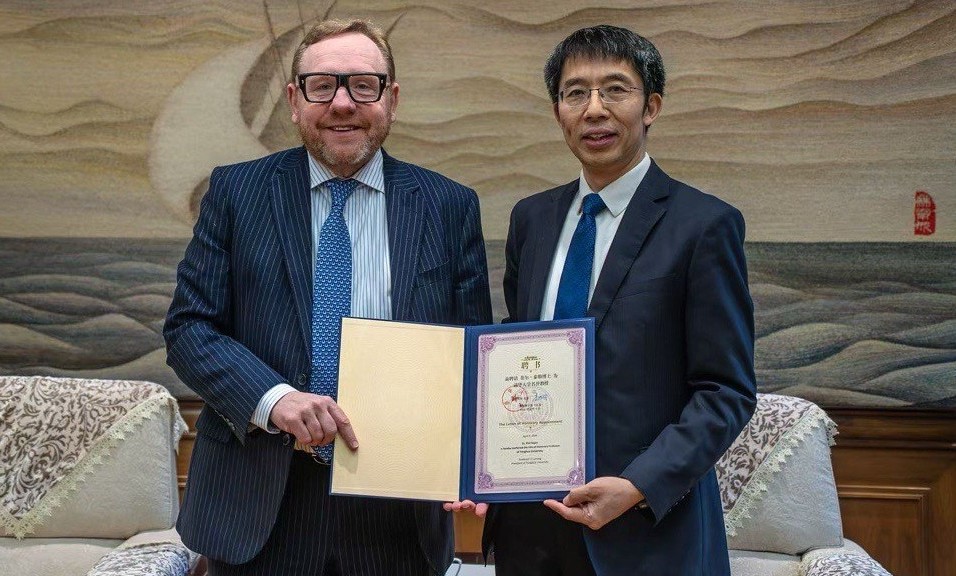
Supergen Energy Networks Director and Vice-Chancellor of the University of Bath, Professor Phil Taylor has been appointed Honorary Professor of Tsinghua University, China.
The appointment highlights the strong and growing research links between the two institutions.
During his recent visit, he shared his thoughts on the future of energy, emphasising the need for systems that are not only low-carbon, but also flexible enough to adapt and remain affordable as demands change.
Director of Supergen Phil Taylor said:
“There are some really big challenges that the UK faces regarding energy systems. One of them is: ‘how do we get to net zero?’ We’re helping tackle that challenge. The other big question is how do we also remain resilient to the effects of climate change – we put energy networks front and centre in that conversation”

A strong line-up of speakers brought both UK and international perspectives. Cathy McClay (National Grid DSO) and Phil Jones (Northern Powergrid) shared insights from the front line of energy system transformation, while Professor Anjan Bose (Washington State University) and Adama Gassama-Jallow (University of The Gambia) highlighted global challenges around renewable integration and inclusive energy access.
Sessions explored key themes including operating future energy grids, strengthening system resilience, and ensuring inclusion in the energy transition, alongside a dedicated workshop on inclusive energy networks. A strong Early Career Researcher presence also reinforced the importance of building skills, networks and new ideas for the future.
Above all, the conference demonstrated the value of collaboration, bringing together different perspectives to turn research into real-world impact. Through new connections, shared learning and ongoing conversations, Supergen continues to support the co-development of solutions that will shape sustainable and resilient energy systems.

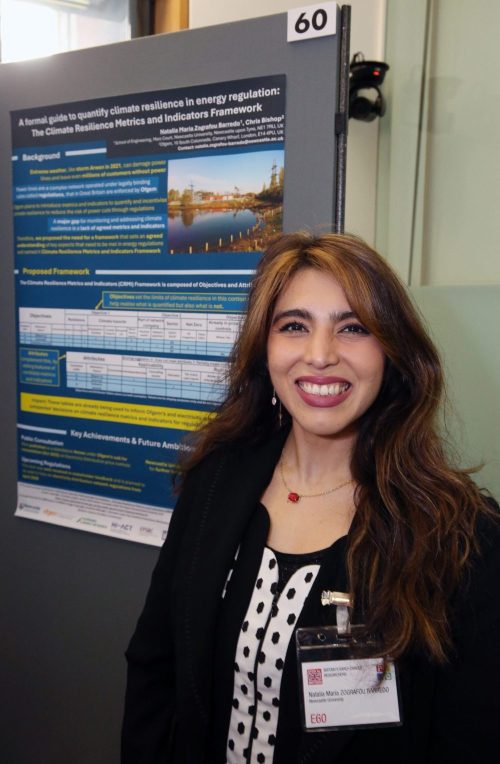
We are delighted to celebrate the achievements of Dr Natalia Zografou‑Barredo, Research Associate in Energy Systems at Newcastle University and a member of the Supergen Energy Networks Hub, who has been selected as a finalist in the Engineering category of the prestigious STEM for Britain Awards 2026.
STEM for Britain is a highly regarded annual competition held at the Houses of Parliament, recognising outstanding research from early‑career scientists, engineers, and mathematicians across the UK. The event provides a national platform for emerging researchers to present their work to politicians, policymakers, and leading figures from across academia and industry.
On 17 March 2026, Natalia presented her research poster titled “A formal guide to quantify climate resilience in energy regulation: The Climate Resilience Metrics and Indicators Framework.” This work was developed during her HI‑ACT secondment and focuses on advancing how climate resilience can be systematically measured and embedded within energy regulation frameworks.
Natalia’s selection as a finalist highlights both the quality and impact of her research, as well as its relevance to current challenges in building a more resilient and sustainable energy system. Her work contributes to ongoing efforts to ensure that energy networks are better equipped to respond to the increasing risks posed by climate change.
We warmly congratulate Natalia on this significant achievement and look forward to seeing her continued contributions to the field.
‘An amazing experience and great privilege to have presented a Poster of my work in the Houses of Common through the STEM for Britain Competition. It is important to be able to disseminate research to a broader audience and this competition definitely made me think outside of the box to do this!’
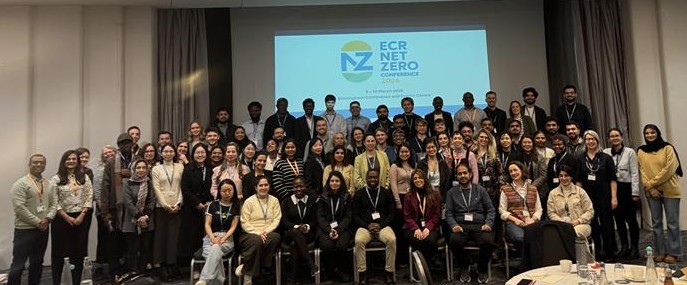
9 – 10 March 2026 – Birmingham Conference and Events Centre (BCEC) (in-person)
This collaborative event brought together Early Career Researchers to share cutting-edge research and build collaborative networks.
The event was sponsored and organised by 16 EPSRC Energy related Research projects including: Supergen Energy Networks Hub, Supergen Bio Energy Hub, SuperAIRE, Supergen Offshore Renewables Hub, ACE Network, EDI+, EDRC, HI-ACT, IDRIC, IGNITE Network+, REEF-UKC, SES Network+, UKERC, UK-HyRES, UKCCSRC and N-ZEEE.
The ECR Net Zero 2026 Conference brought together more than 200 early‑career
researchers for two energising days of networking, learning, and sharing. Supergen Energy Networks Hub were proud to collaborate and organise with the15 EPSRC research projects. The event highlighted the strength of collaboration across the UK’s net‑zero research community, perfectly timed to coincide with International Women’s Day 2026.
The conference opened with a warm welcome from partners across the participating EPSRC‑funded networks, followed by an inspiring keynote from Professor Sara Walker. Delegates enjoyed series of ECR‑led parallel sessions, lively discussions throughout and a networking reception. Further sessions included insights from the International Smart Grid Action Network (ISGAN), followed by a thoughtful Career Pathways Panel chaired by Sam Williamson.
An EDI training session led by Dr Marco Reggiani (University of Strathclyde / IGNITE Network+). provided a clear introduction to equality/equity, diversity and inclusion, exploring why EDI matters for ECRs, how intersecting identities shape research experiences, and the importance of embedding inclusive practice throughout the research lifecycle.
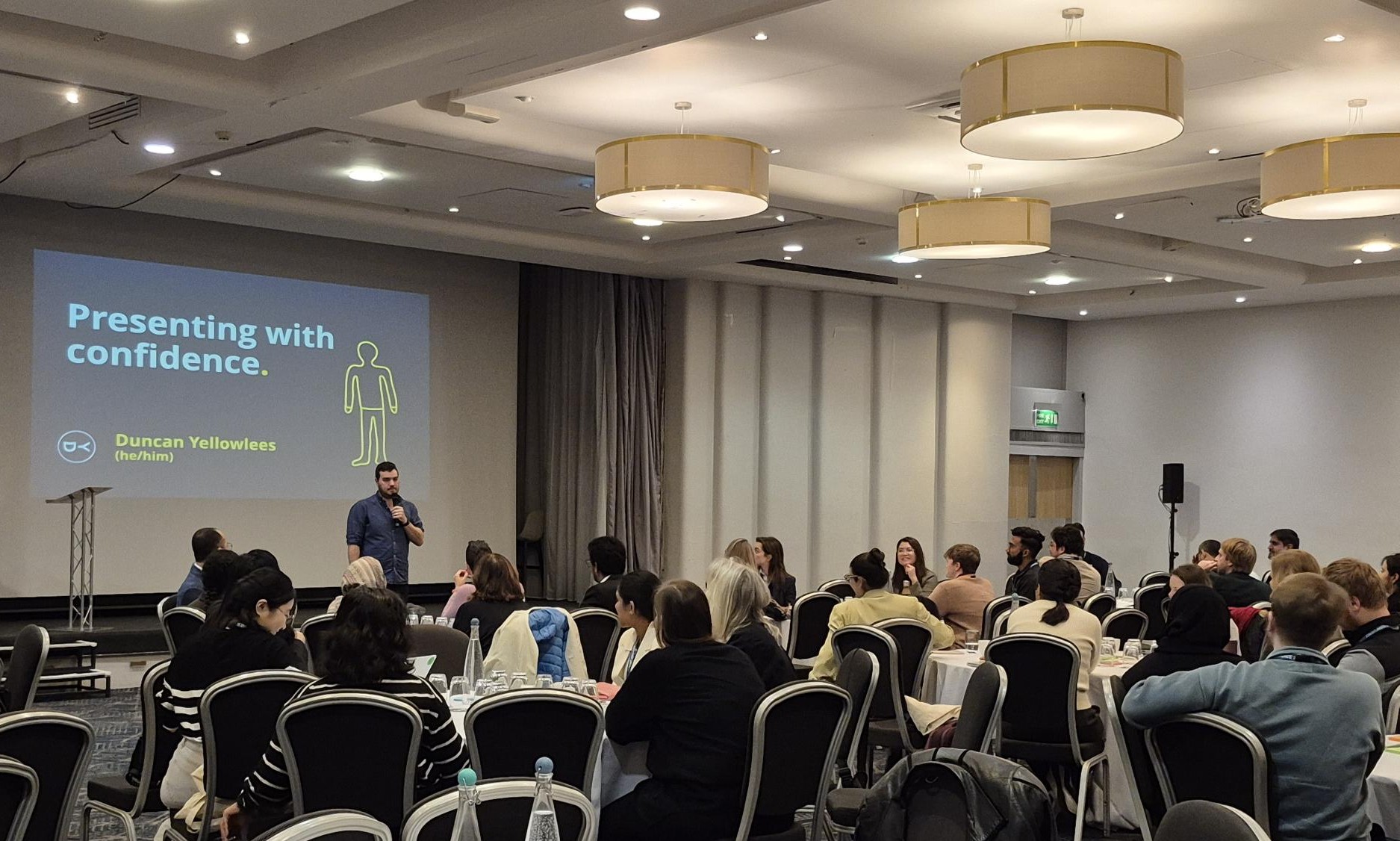
Day 2 brought the highly regarded “Presenting with Confidence” workshop from Duncan Yellowlees, delivered alongside IGNITE Network+. Delegates explored clear communication, audience engagement and the essentials of effective presenting with contributions from EPSRC, the University of Manchester, NESO, and an introduction to the new Greenhouse Gas Removal Future Leaders Network.
The conference concluded with “From Conference to Action”, led by Sam Williamson and Dr Daniel Taylor‑Holland, encouraging delegates to reflect on key learnings and next steps. The event closed by celebrating poster presenters, with 33 posters and 218 votes cast across delegates and judges.
Well done to all the winners, not all were there to receive their prize, but received a huge round of applause.
✨ 1st Prize Judges vote: Ahmad Salam Farooqi, Northumbria University.
Poster Title: Electrochemical CO2 recycling to sustainable aviation fuels (eCOGen)
✨ 2nd Prize Judges vote: Peace John-Banjo, University of Huddersfield.
Poster Title: Green Valorisation of Sea Buckthorn Leaves for Net-Zero Bioeconomy Applications
✨ Delegates prize: Shagbaor Hycent Amool, Heriot-Watt University
Poster Title: Electrochemical Industrial Symbiosis: Turning Carbon and Wastewater into Shared Value.
By the final session, the sense of shared purpose and momentum was unmistakable.
Excellent collaboration and a great experience had by all with connections made.
We are delighted to announce that funding has been awarded to two New Entrants to the Energy Networks Community through our recent Flexible Funding call.
Congratulations to Xue Yong (University of Liverpool) and to Victor Gutierrez-Basulto (Cardiff University).
Project date:
Awarded


AI-Guided Infrastructure Planning: Graph Neural Network-Based Modelling of Commuter Patters for EV Charger Allocation in Railway Networks
South Wales faces a critical “charging divide” hindering EV adoption, particularly for those without off-street parking. Our project tackles this by integrating EV charging with railway station car parks, leveraging cutting-edge Graph Neural Networks.
This AI-driven approach will create a comprehensive framework and practical tool to strategically roll out EV charging infrastructure. We’ll forecast EV adoption and charging demand at railway stations, identify optimal locations and capacities for chargers, and simulate future scenarios using Welsh Government data.
By considering socio-demographic factors, commuter patterns, and grid constraints, we aim to ensure equitable access to charging, maximising coverage and supporting wider socio-economic benefits. This project will deliver data-informed recommendations for efficient and fair deployment, ultimately accelerating e-mobility in South Wales
Project date:
Awarded

Smart Electrolysers, Smarter Grids: AIPowered
Catalyst Design for Dual Grid and
Hydrogen Gain
The UK is rapidly shifting to renewable electricity, with wind and solar providing nearly half its power. But these variable sources don’t always match demand, causing wasted energy—like in winter 2022–23, when enough wind power to supply over a million homes was lost due to grid limits.
A promising solution is to use this excess electricity to produce hydrogen via electrolysis. This “green hydrogen” can be stored and used later, and electrolysers can help stabilise the grid. However, current electrolysers degrade under fluctuating power, respond slowly, and rely on costly materials. This also limits optimisation of grid costs, stability, and reliability.
Therefore, this project will focus on optimising the grid’s dynamic performance by developing AI-driven tools that link catalyst atomic properties to real-time grid conditions. These tools will be built by analysing data on catalysts, grid behaviour, and weather patterns to reduce energy waste, cut costs, and improve reliability. This approach will accelerate the UK’s transition to a fully renewable energy future, benefiting industry, researchers, and society
We are delighted to announce that funding has been awarded to two New Entrants to the Energy Networks Community through our recent Flexible Funding call.
Congratulations to Xue Yong (University of Liverpool) and to Victor Gutierrez-Basulto (Cardiff University).

World-leading energy networks experts will call for renewable power generation facilities to be connected to the UK grid more quickly at a conference in Bath this week.
The Supergen Energy Networks Hub Annual Conference will highlight the role power networks play in delivering key national targets in reaching net zero, delivering green growth, powering new data centres that will help the UK become an AI superpower, and tackling issues including energy security and fuel poverty.
World-leading energy networks experts will call for renewable power generation facilities to be connected to the UK grid more quickly at a conference in Bath this week.
The Supergen Energy Networks Hub Annual Conference will highlight the role power networks play in delivering key national targets in reaching net zero, delivering green growth, powering new data centres that will help the UK become an AI superpower, and tackling issues including energy security and fuel poverty.